How Rising Ambient Temperatures Threaten IT Performance — and What to Do About It
Summer heatwaves are no longer rare events. Across the UK and Europe, each year seems to bring a new round of record-breaking temperatures, longer heat spells, and increasingly frequent amber and red weather warnings. For most people, that means reaching for a fan or staying indoors during the hottest part of the day. For IT infrastructure, it means something far more serious: a growing risk of throttled performance, unplanned downtime, and permanent hardware damage.
Many server rooms, comms cabinets, and micro data centres were designed decades ago, for a climate that no longer exists. As ambient temperatures climb, the thermal buffer these systems were built around is quietly disappearing — and the businesses relying on them often don’t find out until something fails.
This blog looks at why ambient temperature matters so much for IT equipment, what actually happens when systems overheat, and what IT teams can do to build real heat resilience before the next heatwave hits.
Why Ambient Temperature Matters for IT Equipment
Every piece of IT hardware generates heat as a by-product of processing power. That heat needs somewhere to go. Cooling systems work by drawing in ambient air, using it to carry heat away from components, and expelling the warmed air elsewhere. The cooler and more consistent the intake air is, the more effective the whole process is.
Thermal margins shrink during heat waves, and measures such as the ASHRAE temperature range of 18- 27 degrees for optimal IT hardware performance are quickly exceeded. The reality of a heat wave is that ambient temperatures are higher, so IT equipment reaches temperatures where it will struggle more quickly and may remain at higher temperatures for longer.
Exposure to periods of extreme heat stresses IT equipment. Modern CPUs and GPUs are designed to protect themselves by automatically reducing clock speed when the cabinets get hot. They are operational, but this results in slower processing, longer response times, and degraded application performance. High temperatures can accelerate the ageing of electronic components, especially capacitors, power supply units, and hard drives, shortening their service life and increasing the likelihood of failure. Some equipment will shut down to protect itself from extreme heat, which can cause unplanned outages for businesses. IT equipment becomes less efficient during a heat wave because cooling systems must work harder and costs rise.
Some environments are considerably more exposed to heatwave risk than others:
- Server rooms and micro data centres without dedicated precision cooling, relying instead on standard air conditioning never designed for continuous IT heat loads
- Edge computing sites, like retail back-offices, telecoms cabinets and industrial locations often unmonitored and distant from central IT oversight
- Legacy facilities built for lower-density equipment, now housing far more powerful (and heat-generating) hardware than originally planned for
- Businesses using shared office HVAC to cool IT equipment, where comfort settings for people take priority over the tighter tolerances hardware actually needs
If any of this sounds familiar, it’s worth treating heatwave preparedness as a priority rather than an afterthought.
What can we do to protect our systems and build heat resilience?
1. Monitor proactively. Deploy temperature sensors and alerting in server rooms and cabinets so rising conditions are flagged before they become critical — not discovered after a failure.
2. Evaluate Cooling capacity. The cooling capacity should match the heat load. This should be a priority, not an afterthought.
3. Improve airflow management. Simple measures — hot/cold aisle containment, blanking panels, clearing obstructions — can meaningfully improve cooling efficiency without major capital investment.
4. Redundancy plan. Build in failover cooling capacity so that a single unit reaching its limit doesn’t put the whole environment at risk.
5. Consider scalable, portable cooling. For peak-demand periods or as a bridge while permanent upgrades are planned, supplementary cooling can provide critical additional capacity exactly when and where it’s needed.
How Maxi-Cool Helps
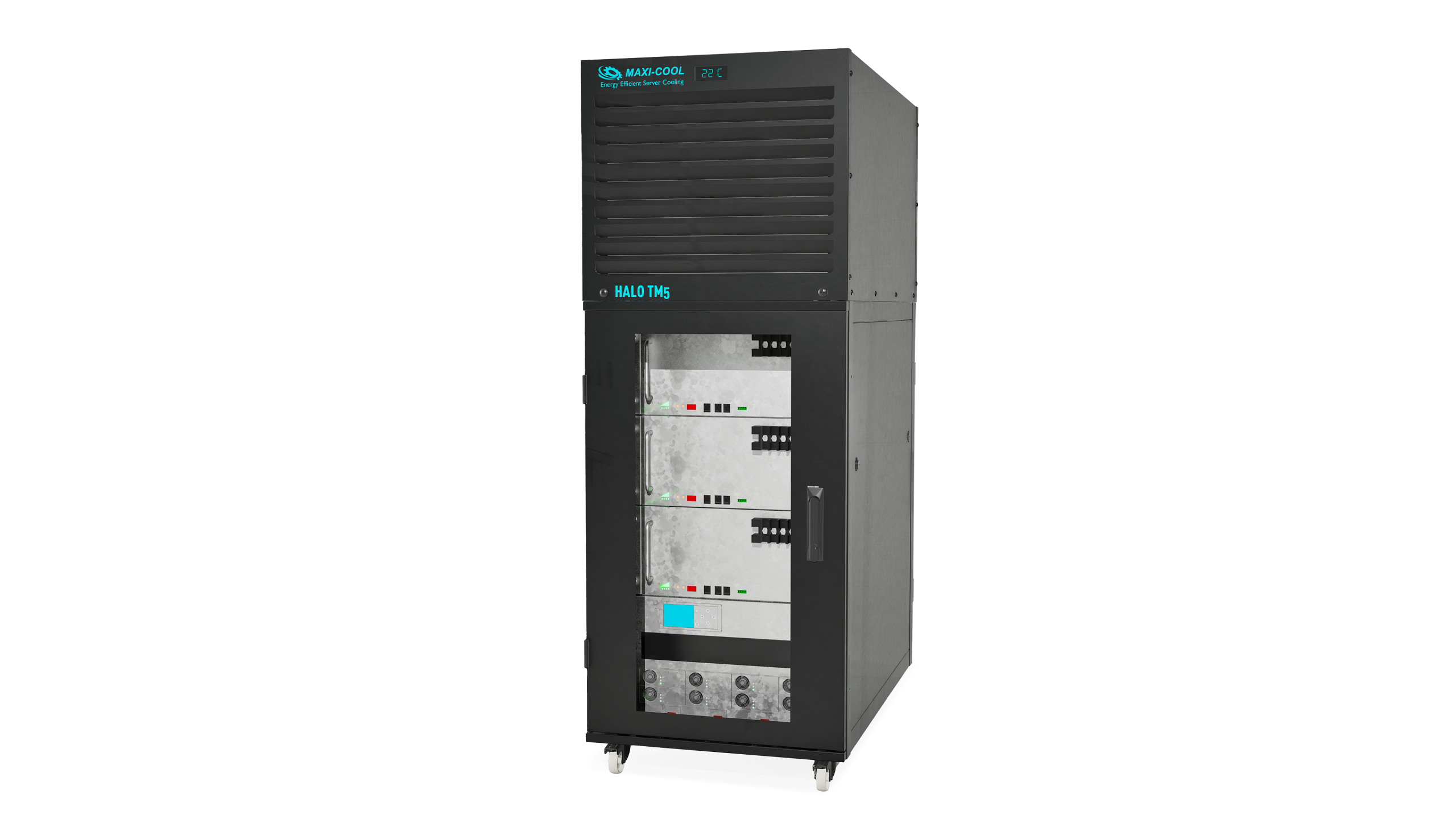
This is precisely the gap Maxi-Cool is built to close. Our solutions are designed to give IT teams fast, reliable, scalable cooling capacity — whether that’s supplementing an existing system during a heatwave, providing redundancy for critical environments, or delivering rapid deployment cooling to sites that need it most. Maxi-Cool is a reliable and energy-efficient rack cooling option that doesn’t inflate your running costs. It is scalable and able to be rapidly deployed. Made in the UK, with reliable lead times, Maxi-Cool is available in standard and bespoke sizes.
Get prepared for heatwaves and put all the steps in place to protect your IT hardware. Get in touch with us today for cooling ideas and solutions for server racks and data cabinets in tricky places. Site surveys available by appointment.